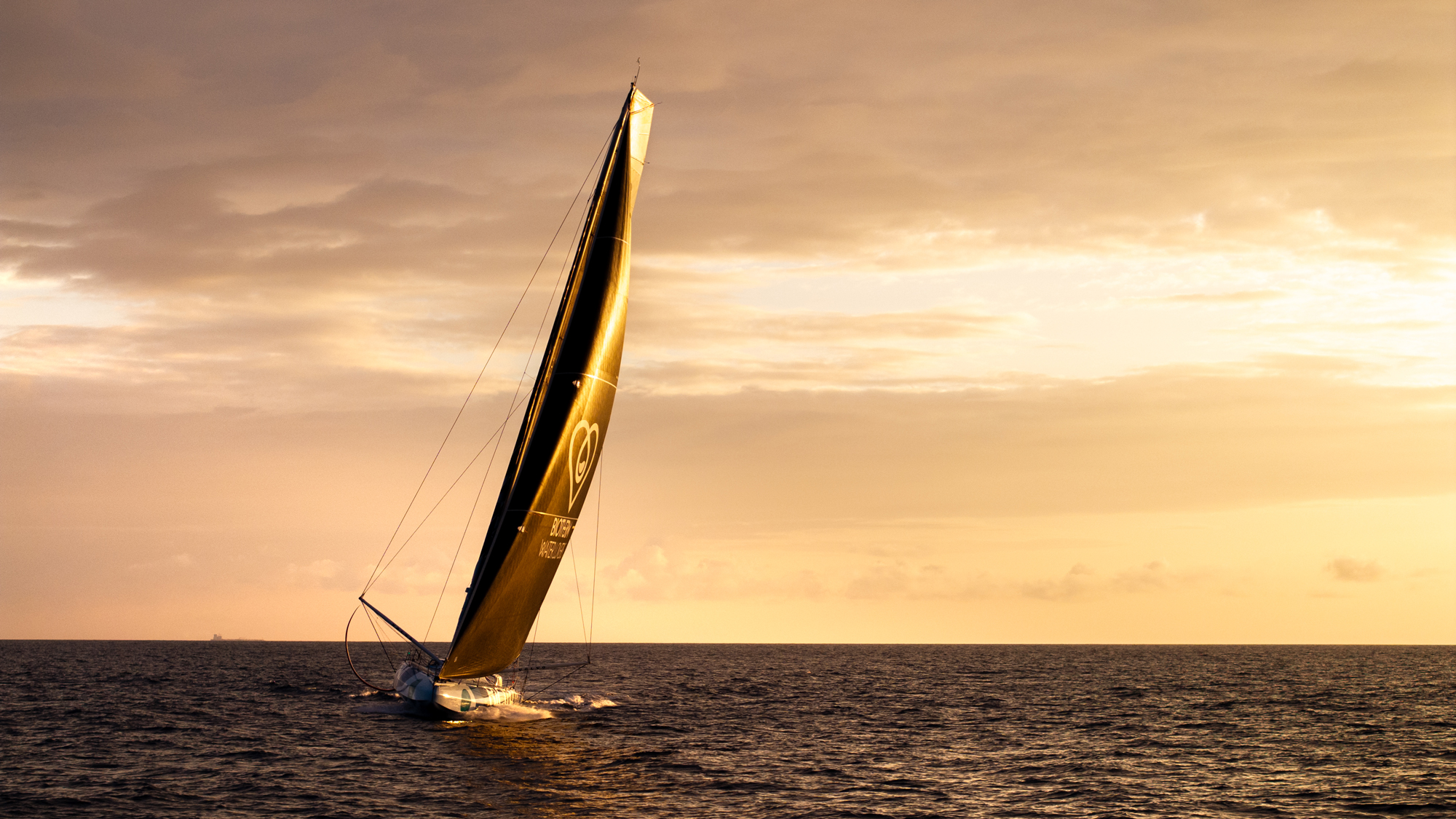
Sailing the Transatlantic Race on Hound: ‘Hound is a poster child for a bygone era of yacht design’

Sailing the Transatlantic Race on the iconic 1970s sloop Hound was a tonic for Conrad Humphreys

It’s early morning on 25 June, and last night was tough. The wind peaked at 32 knots and up on deck the mood was a little sombre. Down in the galley area was the A4 gennaker, soaking wet after being recovered from the sea.

The heavy air sail had burst its zippers before it was on the halyard lock, filling prematurely and loading the halyard. As the on-watch crew tried to winch it up the final metre, the halyard snapped. After I’d shouted for assistance, the soggy sail was recovered back on board, but was in two pieces.

Modern sails and classic lines make Hound a fast all-rounder

Modern sails and classic lines make Hound a fast all-rounder. Photo: Nicholas Horbaczewski

I ran the tapes to see if it was repairable, but sadly the A4 was done. I glanced at the nav computer, we needed that sail to stay with the fleet riding the slow-moving front on the longer easterly route. Without it, we’d fall off the front and into the light winds behind it. We needed a revised strategy.

Ed Cesare and I share the navigating duties on Hound, a beautiful 1970s Aage Nielsen sloop. Built by the renowned Abeking-Rasmussen shipyard, Hound is a poster child for a bygone era of yacht design with her varnished toerails and elegant overhangs.

Sailing the Transatlantic Race: Race-winning upgrades

Hound is owned and skippered by Dan Litchfield, who acquired the yacht in 2020. Together with Tom Stark, Hound’s boat captain, he has overseen a series of race-winning upgrades, including a new, taller carbon mast, a bowsprit and a new North Sail inventory that looks to exploit some of the gaps in her performance polar.

Not just the prettiest boat on the dock, Hound’s classic design now masks an exceptional all-round performance, with no notable performance weakness despite her 25 ton displacement.

Silky smooth sailing and dolphins for company.

Silky smooth sailing and dolphins for company. Photo: Nicholas Horbaczewski

Mid-Atlantic, we quickly ran a new route on Expedition with the latest ECMWF model forecast and it showed the northern route was just a few hours slower than the eastern option. It would put us closer to the ‘great circle’ route and keep us in the stronger north-westerly winds behind the front.

After the A4 sail damage, a noticeably shaken watch had hoisted the jib-top and we were now reaching into an increasingly building sea state. As our watch came back on deck, the decision was already made to put the smaller fractional A3 gennaker up and get ripping along again.

A chance to relax in light airs.

A chance to relax in light airs. Photo: Nicholas Horbaczewski

It’s never an easy decision to split from the fleet, but all three of the yachts ahead of us in our class were lighter, more powerful downwind flyers and would likely stay ahead of the front in fresh south-westerly winds. Ed and I thought it unlikely we could keep up and, once that was clear, Dan made the quick decision to back ourselves on the northern route.

Article continues below…

Dodging windmillls

The RORC Transatlantic Race takes the fleet from Newport, Rhode Island, to Cowes, UK – a month before the centenary edition of the Rolex Fastnet Race (for which I would also be navigating on Hound).

The Transatlantic started at 1300 EDT on 18 June with the line shrouded in thick fog. It was just possible to make out the Castle Hill lighthouse, which marked one end. We had a great start and spent the first night sailing right through the middle of the partially constructed Vineyard Wind Farm (the first commercial wind farm in the US).

Hound didn’t win the RORC Transatlantic Race, but Conrad Humphreys still found the adventure was an enlightening experience

Hound didn’t win the RORC Transatlantic Race, but Conrad Humphreys still found the adventure was an enlightening experience. Photo: Nicholas Horbaczewski

We weren’t the only ones to sail right through the middle of the farm, and I soon heard another former Global Challenge skipper and great friend Dee Caffari on the radio, talking to the wind farm operator, who seemed bemused as to why we’d knowingly sail through a wind farm in thick fog.

Like Dee, we had sight on both radar and AIS of the 62 giant turbines that were spaced one mile apart. Unknown to both of us was the fact that many were not yet in operation and not on AIS!

Once safely through we set about crossing the Nantucket Shoals, where the first of two waypoints were set to keep us to the south of the North Atlantic Right Whale area of conservation – an initiative where science is increasingly being used to help keep sailing boats away from sensitive whaling conservation zones.

Humphreys studies the weather

Humphreys studies the weather. Photo: Nicholas Horbaczewski

From Nantucket, we began a 1,200-mile drag race to the southern ice limit waypoint Alpha. Having watched fellow IRC competitor Moana extend a little in the early stages of the leg, sailing in the north with better pressure closer to the ice limit, we opted to also leave any favourable Gulf Stream early and look for better pressure.

As the high pressure took hold, Moana and the two other class leaders (Haspa Hamburg and Ikigai) found themselves in the centre of the high, so we made some really good gains around the outside with a track along the ice limit. By the time we reached Point Alpha we were back leading our class in IRC.

Route choices

On Hound, we sail with two watches, with Ed and I sharing the navigation duties. Using Starlink, we can grab regular GRIB weather files (ECMWF and GFS global models), satellite imagery, synoptic charts and some local observations (normally from buoys or other ships) We would then run the models using Expedition and colour code our routes, before spending time doing some analysis, based on our actual observed conditions.

Straight from the oven.

Straight from the oven. Photo: Nicholas Horbaczewski

We’d also run some routes for our competitors, which are tracked via Yellowbrick. At Point Alpha there was a nice jet of Gulf Stream current running to the north-east (up to 2.5 knots), but after that the routeing suggested we continue sailing eastward just ahead of a cold front, rather than the more typical great circle course to the north-east.

There was a danger with following that route, that unless we could maintain high averages, we might fall off the back of the front.

Ed and I considered that if we couldn’t maintain high speeds, we might be better gybing back onto port towards the rhumb line, so we ‘forced’ the routeing with an extra mark on the great circle course – the delta was only three hours, which didn’t seem a lot, considering there was a risk that if we dropped off the front, we’d be forced to gybe north in much lighter winds.

Original 1970s coffee grinder is still in use.

Original 1970s coffee grinder is still in use. Photo: Nicholas Horbaczewski

Splitting from the fleet was not a decision I wanted to take, albeit we were the slowest of our class and the most likely to drop off the front first.

We agreed to push on with our eastward trajectory and look at the next weather update in six hours’ time. The breeze was steady at 20-25 knots and the on-watch decided to set the A4 gennaker. It was moments later that we were back on deck fishing the sail out of the water.

For the first few days, confidence built in our revised strategy. With the A3 we were quick and, while the sea state was challenging, we found a mode that was fast. However, our friends in the east were also making good speeds, pointing their bows directly at the UK. We could only hope that the front would overhaul them.

Modern sails and classic lines make Hound a fast all-rounder

Modern sails and classic lines make Hound a fast all-rounder. Photo: Nicholas Horbaczewski

Last chance

Twenty-four hours later our speed slowed as the low pressure moved away and high pressure moved in. A powerful secondary low formed on the trailing edge of the front and this was the killer blow.

Fresh Atlantic sailing.

Fresh Atlantic sailing. Photo: Nicholas Horbaczewski

It provided a welcome slingshot for the eastern pack, allowing them to sail fast downwind almost all the way to the western approaches. We faced some headwinds on the northern side of the low, but were too far away to pass under it. This was sadly the nail in our coffin. We could only watch as Moana, Haspa Hamburg and Ikigai disappeared over the horizon and we were left languishing.

What did surprise me, however, was that despite these light downwind conditions Hound was still making good speed. We had a few hours where the wind shut down completely, but in 6 knots of wind we could sail very deep at 130-150° TWA with 7 knots boatspeed. Which, for a 25-tonne yacht, was impressive!

The sailing was silky smooth and we experienced some of the best sunrises and sunsets of the trip. We were also treated to an awesome display of wildlife with numerous whale and dolphin sightings.

Drone shot as Hound heads into a sunset.

Drone shot as Hound heads into a sunset. Photo: Nicholas Horbaczewski

It was magical sailing and I think we learned a lot about the boat’s performance during that final week that would prove invaluable for the Rolex Fastnet Race later in July.

As we closed in on the Isles of Scilly, we got our first glimpses of the infamous Bishop Rock Lighthouse and the low lying island of St Agnes. From there we passed Wolf Rock and finally closed in on the Lizard, passing it on 4 July, to mark our official time for crossing the Atlantic.

From the Lizard to Start Point is my back garden, having spent many wonderful training sessions between Plymouth, Lizard and Start Point as I prepared for the Vendée Globe. Plymouth has been home since 1994, so I always feel a great sense of nostalgia arriving back into these waters. Luckily for me, the wind lifted us into the bay, so we passed within a mile of Eddystone Lighthouse.

Carbon mast and a bowsprit mean Hound can carry more sail area.

Carbon mast and a bowsprit mean Hound can carry more sail area. Photo: Nicholas Horbaczewski

Raiding party

We gybed back onto starboard as the wind continued to back around to the south-west and build. We peeled to the A2 gennaker off Start Point and Tom appeared with the customs flags, a yellow for ‘Q’ and the Red Ensign. Moments later, a large grey Border Control vessel passed by, I guessed en route to Plymouth.

But they paused behind us and then proceeded to launch their RIB, which was aimed straight at our stern wake.

UK Border Force officers climb aboard Hound.

UK Border Force officers climb aboard Hound. Photo: Nicholas Horbaczewski

I called them up on the radio to ask what their intentions were and to see how we might assist, but before I had a chance to finish the call, they’d rammed the RIB alongside and four border control officers hauled themselves on deck.

They then searched the vessel while the person in charge asked a series of questions as to what we were carrying. I was quite surprised – boarding a yacht while racing under spinnaker at speeds of over 10 knots was dangerous and unnecessary.

Hound’s RORC Transatlantic Race crew

Hound’s RORC Transatlantic Race crew. Photo: Nicholas Horbaczewski

A quick search online would have identified the boat, the American flag and the fact that were racing in the Transatlantic Race. We were also flying a Q flag, which should have indicated we were complying with Customs regulations. Then, having established our credentials they left via the high side of the yacht, almost causing an incident with one of their own team. I was left pretty flabbergasted after the raiding party left.

The final run up the Channel was great fun, with winds of 20 knots from the south-west, we gybed in towards Portland Bill and then picked up a favourable wind shift to lay the Needles.

Humphreys takes his turn on the coffee grinder

Humphreys takes his turn on the coffee grinder. Photo: Nicholas Horbaczewski

By this point it was dark, so my American team mates weren’t able to see the famous rock formation at the entrance to the Solent, but I could sense their excitement as we swept past Hurst Castle with the flood tide and finally crossed the line off Cowes to finish the Transatlantic Race in an elapsed time of 16d 08h 49mins.

Overall, this was one of my best transatlantic crossings. Hound proved herself a wonderful yacht to race. The sunsets, the wildlife, the banter and the exquisite food made for a fine adventure and I was looking forward to our next race in July, the Rolex Fastnet Race.


If you enjoyed this….

Yachting World is the world’s leading magazine for bluewater cruisers and offshore sailors. Every month we have inspirational adventures and practical features to help you realise your sailing dreams.

Build your knowledge with a subscription delivered to your door. See our latest offers and save at least 30% off the cover price.

Note: We may earn a commission when you buy through links on our site, at no extra cost to you. This doesn’t affect our editorial independence.

Everything you need to know about high performance autopilots

Autopilot technology is evolving at a rapid pace, with the best of today’s units offering exceptional performance, both for racing and cruising. Rupert Holmes reports

It’s 0230 in the morning and we’re sailing close-hauled mid-Channel with the breeze gusting to 30 knots. In the strongest puffs our heading feathers up a little into the wind to avoid excess heel, while simultaneously maximising VMG. Equally, in the lulls we bear away a little to power the boat up and build speed.

This is exactly what you’d expect of a skilled helmsman, but I’m alone on deck, focusing on sail trim and maintaining a look out, rather than driving, while racing a Class 40 equipped with a B&G H5000 pilot system, plus additional overlays from Pixel sur Mer’s Exocet Essential system. The latter is a multifunction device that includes data logging, sophisticated sensor management and improved autopilot functionality, with both safety and performance overlays.

It’s among a number of top-level pilots that are widely recognised as offering exceptional performance. Legendary French sailor and Route du Rhum winner and record breaker, Loïck Peyron, for instance, told an audience at last year’s Yacht Racing Forum: “The new generation of pilots we have today are absolutely amazing.”

While these systems were originally developed primarily for Class 40s, IMOCA 60s and Ultime trimarans, many of the benefits they bring are equally relevant to cruising yachts, whether large high-performance catamarans or more modest monohulls. Optimising windward performance may not be a high priority for most cruisers, but a great pilot that’s properly set up will make for a more comfortable motion in challenging conditions, with less heel in gusts.

Autopilot reliability and safety

My own experience of using the Exocet Essential and B&G H5000 combination also shows it being very stable with a quartering sea, even when pushing hard with boat speeds of 20 knots, with the pilot retaining excellent control. At these speeds even a small miscalculation of the required rudder angle can create major problems, making it a challenge to develop pilots for fast boats. And of course foiling adds a whole additional dimension.

Historically, pilots were most challenged in the big waves of breezy downwind conditions, with an awkward quartering sea. This, of course, is exactly the weather in which an accidental gybe can be particularly dangerous. In last year’s Rolex Sydney Hobart race, for instance, two crew members on different boats died as the result of a head injury and crush injuries in heavy weather.

While these vessels had full race teams on board and were being hand-steered at the time, a pilot that can steer reliably in these conditions can be a big boost to the safety of a cruising yacht, even if a preventer is properly set up.

A good pilot will also create a more comfortable motion in these conditions, markedly reducing the tendency to corkscrew. However, to be safe, the system must also have bulletproof reliability. More on that later.

B&G’s H5000 Pilot has years of development expertise behind it

The Exocet’s overlays take the form of an expert system – a type of AI – that sits between the user and the H5000 controller. The B&G unit sees it as a virtual pilot controller, while the expert systems change the requested pilot heading depending on inputs from sensor data, including speed, heel and wind data.

In effect, the pilot computer sees this as the same thing as a human pressing the +/- 1 buttons a few times to help the boat, for instance, to bear away in a gust when broad reaching, even before the heel angle starts to increase. The system is close to achieving the holy grail of steering in a pro-active manner, just like a skilled human helmsman. By contrast, traditional pilots are only reactive – they must wait for a parameter to change and then react to it.

The Exocet’s overlays also allow you to sail to a heel angle, for instance when downwind or blast reaching in exactly the same way as you would sailing a planing dinghy – bearing away in the gusts and coming up in the lulls. It can also steer to a target speed, heading up as much as possible, while trying to stay within the user’s requested heel angle target range, or to a wind angle target, and two overlays can be used simultaneously.

Exocet Essential is Pixel Sur Mer’s entry level data acquisition and navigation system

This may sound complex but the reality is it’s a bit like sail trim and French short-handed racers talk about ‘trimming the pilot’ in much the same way as trimming sails. For fast cruising you can pick settings that are approximately right to achieve great performance, but extra effort in this respect can pay dividends when racing.

Before choosing a system it’s worth being ruthlessly realistic about how much set up you’re actually going to do. I’ve sailed raceboats with complex and expensive electronics that require extensive set up to get decent performance, yet every setting was still on the factory default even after the completion of a Rolex Fastnet Race campaign.

The owners of these boats might therefore have been better served by a more economic plug-and-play system, such as Raymarine’s Evolution series, that uses AI originally developed by then parent company FLIR to improve performance without the need for users to tweak complex settings.

NKE Gyropilot 3 – the French firm is popular with professional racers

Choosing systems to suit

Different manufacturers take different attitudes to the amount of set up required to gain maximum performance from a pilot. Both Raymarine and Garmin, for instance, have opted for a simple approach with automated calibration used wherever possible. Yet this doesn’t necessarily imply a dumbed-down method.

Part of the rationale behind Raymarine’s recently launched RSW SmartWind sensor, for instance, was to improve performance of its Evolution range of pilots, without the need for either a time-consuming set up or a complex user interface.

Both a nine-axis sensor and a processor are built into the SmartWind masthead unit, enabling real-time cleaning of the wind data that takes account of the boat’s roll and pitch, factors that, of course, are greatly magnified aloft. The upwash from the top of the rig is also estimated for different wind angles and strengths. The result is significantly better pilot performance, especially upwind and downwind, when you’re most likely to be using wind modes.

While this is not as accurate as comprehensive calibration achieved over a long period of time by professional race navigators, it represents a huge step forward for everyone else.

“Our aim with this was to give 85-90% of the performance of very high end systems straight out the box,” Raymarine product management director Will Sayer told me.

Raymarine keeps things simple by using a new SmartWind masthead sensor to improve performance of its Evolution range of pilots, aiming to achieve 80% of the performance of high-end systems, without the complexity

B&G’s collaboration with Pixel sur Mer also includes markedly improved course keeping algorithms for the high-end H5000 pilot system.

“The H5000 pilot needs to function across a wide range of boats, from the Sun Fast 30 through IMOCAs to superyachts, as well as more modest cruisers sailing across the Atlantic,” says B&G product director Matt Eeles. After basic calibration procedures, it therefore performs well out of the box across all these boats and for all but the most demanding of users in high echelons of the racing world.

“Working with Pixel sur Mer we were able to test changes to the B&G algorithms one at a time in a controlled environment on a very wide variety of boats, for instance to see what standard settings needed to change to improve the weather helm algorithm,” Eeles adds.

“The process took years before it could be rolled out to the public, via a software update early last year.” This improved functionality is also available to existing H5000 users.

This system therefore gives users the opportunity to use it with a minimum of set up, while also having the benefit of more advanced settings that can be tweaked to improve steering response in a wide range of more testing conditions.

The Madintec pilot system was designed from scratch to make extensive use of AI to boost performance

Features include a recovery mode that quickly corrects for sudden course deviations caused by out of pattern waves. Gust response takes preventative action based on instrument data to hold a more stable course in changeable winds. Thirdly, high-wind response bears the yacht away when wind speed increases while reaching, keeping the boat flatter and driving faster. There are also failsafe algorithms and user configurable hard limits that increase safety factors.

AI simplicity wins

Madintec, another small French company, was formed in 2017 with the express intention of creating the ultimate pilot system, creating an all-new platform from scratch that makes extensive use of AI to boost performance, streamline the user interface and improve sensor calibration.

Yet at the same time, a key principle from the outset was that it had to be simple. “Simple for pro sailors and simple for amateurs,” research engineer Pia Mathias told an audience at the Yacht Racing Forum. “If we look at the Vendée Globe, sometimes skippers haven’t eaten in a few days and they haven’t slept a lot. So a tired skipper has to be able to use our pilots and a new skipper also has to be able to use them.”

The company was founded by veterans of an America’s Cup campaign who saw an opportunity to transfer technologies and methodologies from both the Cup and the aerospace sector into offshore yacht racing and then into more everyday sailing. It has been hugely successful, with the system, for example, chosen by the last two Vendée Globe winners, Charlie Dalin and Yannick Bestaven.

While Madintec originally had Class 40s, IMOCAs and Ultimes in mind, it’s now also gaining traction among short-handed IRC racers and in the cruising world. The first four 33ft Pogo RCs, for instance, are all equipped with Madintec systems. It also worked closely with MODX to develop a fully automated control system for the inflatable wing sails on this extraordinary 70ft catamaran.

Time to hand over?

So, what about the question of whether today’s AI-enhanced performance pilots make for better helmsmen than humans?

While that’s the ultimate aim, and the very best systems are making great strides in that direction, they aren’t there yet. A lot of recent R&D has also been spent on controlling the flight of foiling boats, technology less relevant to the majority of cruising sailors. So, arguably no pilot is yet as good as a skilled and focused human driver, an important point for the crewed offshore racing world – but they can be a lot better than a less skilled and tired crew member on a cruising yacht!


If you enjoyed this….

Yachting World is the world’s leading magazine for bluewater cruisers and offshore sailors. Every month we have inspirational adventures and practical features to help you realise your sailing dreams.

Build your knowledge with a subscription delivered to your door. See our latest offers and save at least 30% off the cover price.

Note: We may earn a commission when you buy through links on our site, at no extra cost to you. This doesn’t affect our editorial independence.


MODX: An electric 70ft catamaran with inflatable wingsails!

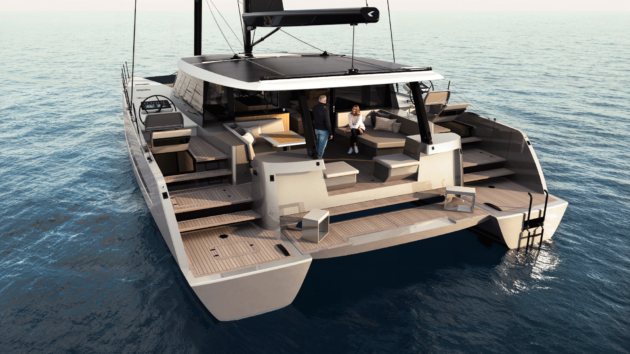
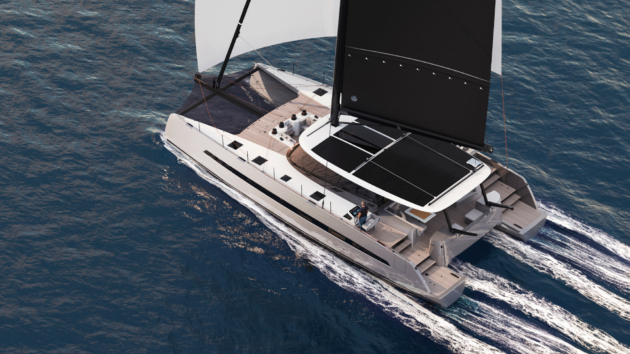
The MODX is a 70ft catamaran with fully automated twin inflatable rotating wingsails set on telescopic retractable masts and powered by electric motors with variable pitch, hydrogenerating propellers.

Every now and again something really different comes along, and this was one of those concepts you don’t think will come to reality. I say that, having spoken to the design team about it years ago, and seen plenty of renderings of what it might look like.

So, the curiosity of such a venture we expected. The fact that our video tour from its launch at the International Multihull Show in May was one of our fastest to reach 100,000 views, less so. Also noteworthy with that video is the sheer amount of largely positive comments supporting the technological development (when you consider that these comments stem from a typically sceptical audience).

Everything about this project is quite fascinating, from the VPLP-designed wave-piercing hulls to the automated power and sail systems. A primary goal for the MODX is to offer zero CO2 emission cruising by utilising completely renewable energies.

The scheme carries plenty of credibility, thanks to design by VPLP and construction by Océan Développement, the yard responsible for the fleet of MOD 70 ocean racing one-design trimarans built in 2008.

Thermoplastic polyurethane wingsails are raised on rotating, telescopic masts. Photo: Ronan Gladu

However, it’s those enormous wingsails which spike the most interest, of course.

Built by Aeroforce, a company set up specifically to develop the technology, these twin AF125s are each 125m2 inflatable wings with auto trim functionality. They’re claimed to be 1.7 times more efficient, safer (no winches/ropes), and create 20% more space aboard than conventional rigs.

Blow up sails

“Powerful and stable wings that can be automated is why we developed Aeroforce,” CEO Jean Guyon told me during the yacht’s premiere in La Grande Motte. “The MODX’s goal was to be energy independent. So we needed a fast boat, but it’s also why there are wingsails – the target was that in 10 knots wind, we should do 10 knots boat speed.”

The telescopic masts are formed of six sections which rotate around bearings at waterline and deck level. The masts are 23m high when fully raised and have a deep reef to reduce the sailplan to 65%. (It’s worth noting that most sailing footage so far shows the yacht in reefed format.)

Sails are inflated to their aerofoil shape – a process that takes just eight minutes. Photo: Ronan Gladu

The wings are housed in huge cradles above the coachroof and take eight minutes to hoist and inflate. Made from thermoplastic polyurethane (TPU), these sails are inflated to a comparatively low pressure of 100 millibar, or around 10 times less pressure than a typical inflatable paddleboard – which allows pumps to be used for inflation rather than compressors.

The wings also have a trailing flap, which works like those of an aeroplane to increase lift by 30-40%, Guyon estimates. He explained how the airfoil shape increases airflow on both sides of the wing, “so pointing is quite good at 40-45° to the apparent wind.”

In terms of performance, the MODX has hit 21.5 knots in 25 knots of wind at 150° to the apparent, or 9.5 knots in 11.5 knots at 46° apparent – which is already very close to the initial target of 10 knots in 10 knots of wind.

The gearbox and rotating chain used at the mast bases allow for 360° rotation of the wings, providing a tangible benefit for spilling wind. Consider how smooth and quiet gybes can be when you can completely open the sails and rotate the masts downwind through the gybe. This brings us to the yacht’s impressive automatic operation.

The 70-footer also offers luxurious accommodation. Photo: Martin Viezzer

Auto functionality

The MODX is piloted from a single wheel and internal helm station, adorned with touchscreens. “The project is trying to attract people from power without the complexity of sail,” is how VPLP’s Mathius Maurios explained the concept to me.
“It’s about being on the water without being stressed.” With this in mind, the project team wanted a fully automated sail/wing control system, as easy to use as cruise control.

The aft owners cabin is luxurious. Photo: Martin Viezzer

They worked with Madintec to develop a highly sophisticated yet approachable wing, hydro and energy management system.

This French company has developed performance autopilot systems for many of the top IMOCA 60 teams. So when you look at the helm station on the yacht, on one side is the throttle control for the electric engine, and on the other, a more crude, simple throttle lever (which looks like something out of a Thunderbirds rocket).

A solo-operated 70ft cat? Helm station has throttles for the electric motors and wind engine. Photo: Chloe Lambelet

So, in terms of piloting this 70ft performance catamaran, once wings are raised, the operator simply pushes the wing throttle lever forward, selecting from 0-100% of potential force. Therefore, it’s not just an auto-driving boat, but one that uses auto-tuned sails too. If you only want 50% of the power available, it’ll release the sails to spill more wind.

Silent sailing, silent power

With no running rigging, the coachroof can be pushed out to maximum beam, creating the largest area possible for solar panels. The MODX has 70m2 of panels, which provide a peak of 15kW, or up to 35% of its electrical energy mix. Although the company is looking into a flybridge alternative to cater to demand, this wide, flat surface on the first boat is also ideal for harvesting rainwater, and there are two 400lt tanks dedicated to this.

No side decks, engines or tender aft – instead clear transoms and a huge aft leisure cockpit. Photo: Ronan Gladu

At the heart of the electrical system is a 250kWh LFP lithium battery bank – as a comparison a battery in a large electric car is around 90kWh. It’s enough for guests to live aboard for 10 days without sun, wind or engine use, or provides 110 miles motoring range at 5 knots. When sailing, the variable pitch propeller can hydrogenerate power back into the battery bank. So, at 15 knots boat speed, it’s possible to generate 16kWh back into the system.

Unfortunately, what we can’t show you is the nucleus of the MODX system: its technical rooms. I was granted a quick look but not allowed to take photos or video. These are located at the mast bases at the foot of each forward companionway and house the electrical and telescopic mast systems, in a cocoon of carbon fibre with significant bulkheads to help support the latter. Otherwise, the MODX is built in glassfibre, using bio-sourced resin and 40% recycled foam.

A throttle lever is used to control sail power. “A ‘wing throttle’ is the best way to think about the power of the wing, like an engine throttle,” says Aeroforce’s CEO Jean Guyon. Photo: Yachting World

The rest of the interior in the first boat is suitably luxurious, particularly on the main deck, which offers motoryacht-style comfort, near-surround ocean views, and 135m2 living space in the saloon, fore and aft decks. However, we can’t go into more accommodation detail as it’s a largely customisable space to suit private, charter or ‘expedition’ use.

A MOD Future?

So what is the future for this concept, and what size vessels might the Aeroforce wings be practical for? “The initial design was for 55ft, but we needed more solar to reach the efficiency targets,” Guyon explained. The right balance of solar and boat speed was found at 70ft. He added that doing a 100-footer would be easier than a 55: “I don’t see the potential in less than a 100m2 wingsail size.”

Aeroforce is also looking at the obvious potential of its wings for commercial shipping, as well as for leisure monohulls, where they might provide less heeling moment and more thrust.

MODX specifications

LOA: 21.33m / 70ft 0in
Beam: 10.00m / 32ft 10in
Draught: 2.00m / 6ft 7in
Air draught: 4.60m / 15ft 1in
Wing area: 2 x 125m2 / 2 x 1,345ft2
Displacement: 30,000kg / 66,138lb
Electric motors: 2 x 20kW / 2 x 27hp


If you enjoyed this….

Yachting World is the world’s leading magazine for bluewater cruisers and offshore sailors. Every month we have inspirational adventures and practical features to help you realise your sailing dreams.

Build your knowledge with a subscription delivered to your door. See our latest offers and save at least 30% off the cover price.

Note: We may earn a commission when you buy through links on our site, at no extra cost to you. This doesn’t affect our editorial independence.


‘The crash was a reminder for us all’ – Nikki Henderson

When the pros are caught on camera making mistakes it proves there’s no such thing as a perfect sailor

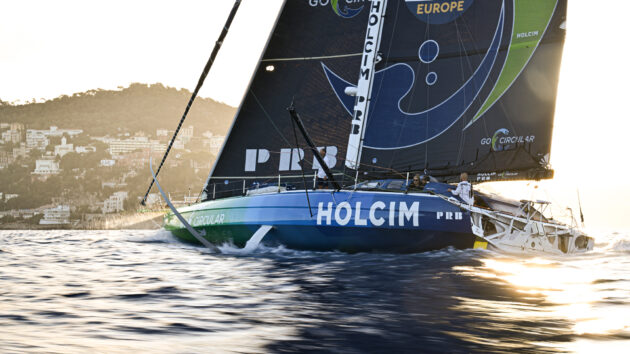
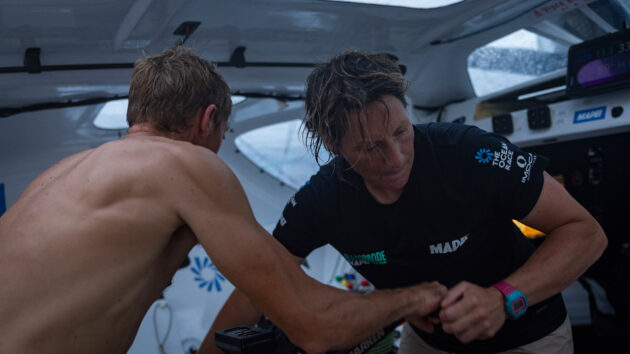
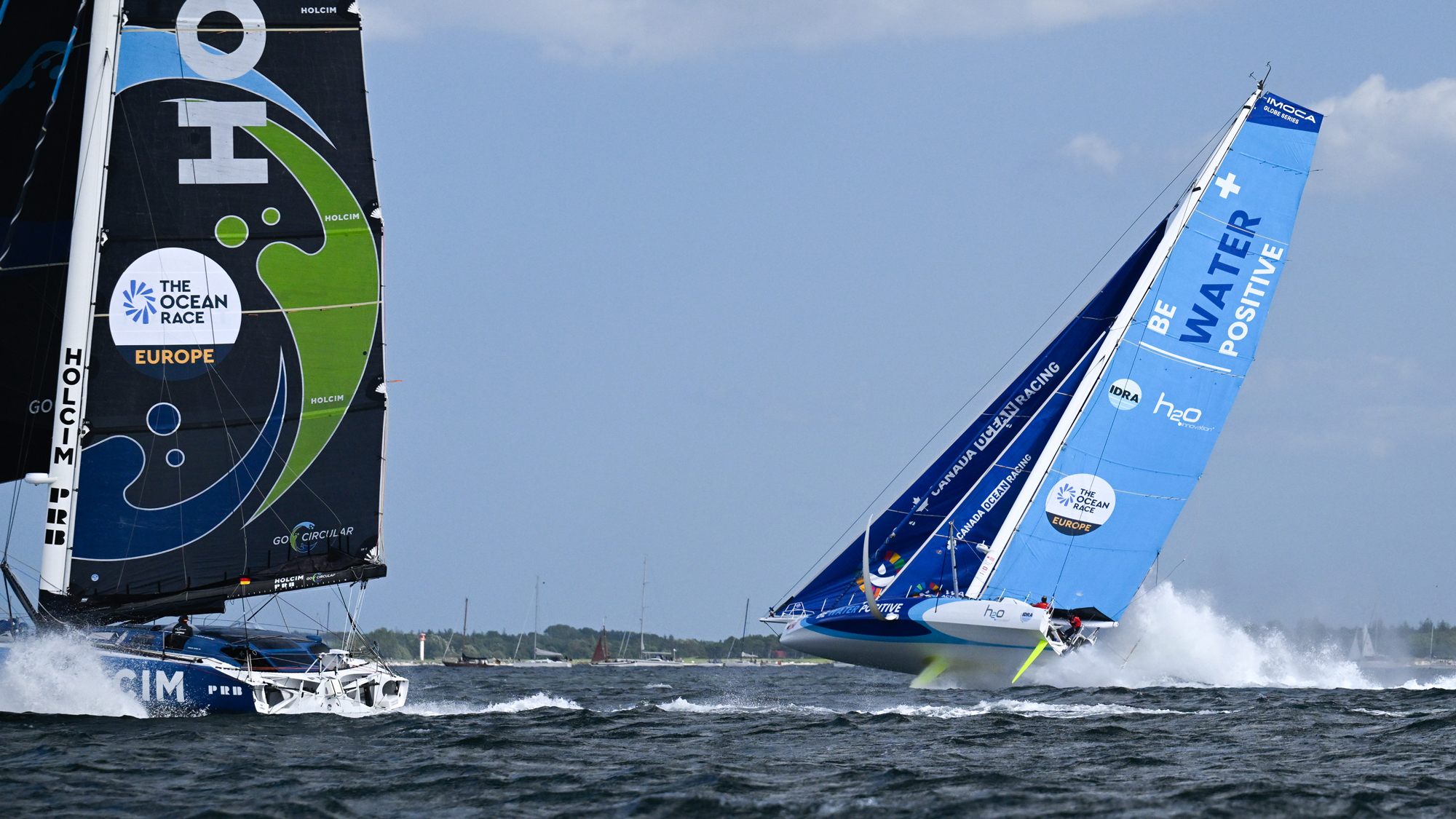
You probably saw the collision between the Allagrande Mapei Racing and Team Holcim PRB IMOCAs just moments after the start of the Ocean Race Europe. In the way spectacular disasters are, it was as harrowing as it was addictive to watch. The ease at which Holcim’s foil cut through Allagrande’s headsail cloth was sickeningly impressive, and it’s lucky no one was hurt. But it was also proof of how remarkable these boats are.

The crash was a hearty reminder for us all: mistakes happen, even to the most skilled sailors. If you’re human, you make mistakes, especially in sailing. We need high-profile moments like this to change the culture around mistakes and to remind us that errors don’t make you a bad sailor.

There’s a story many new sailors tell themselves: “When I get good enough at sailing, I won’t mess up anymore.” Perfection feels like the goal, but that’s a myth: perfection is unachievable.

The reality is that mistakes are inevitable. Just consider all the factors that go hand-in-hand with sailing: fatigue, stress, appetite for risk, cognitive overload. Then combine it with the context of changeable weather, unpredictable competitors and high stakes decisions. It’s ludicrous to think otherwise.

I believe we all get allocated the same number of mistakes in life. They just scale relative to your environment and abilities.

Beginner sailors make ‘rookie’ mistakes like tying fenders wrong and dropping them overboard or putting up the wrong headsail.

Intermediate sailors make bolder mistakes, like reefing too late or making sloppy nav calls, usually just when they need a reminder to stay humble.

There was also a crash in Leg 7 of the last Ocean Race

Pros make high speed, high stakes mistakes like aggressive start line tactics or split-second miscalculations. What changes as you progress isn’t the quantity of mistakes you make, it’s the type of mistakes. And while a crash in the Ocean Race might seem bigger than a poorly tied knot, I’ve seen beginners suffer near-panic over small errors. How awful a mistake feels has more to do with you than the slip-up itself.

I hate making mistakes. I hate looking silly or messing up, or worse: being blamed. It probably stems from a fear of rejection. It’s something I have to actively work on.

Mistakes are part of learning and avoiding them means avoiding improving. And the more we fear mistakes the more likely we are to make them. Just put someone under pressure and watch them tie a knot while shouting the oh-so-tempting “hurry up” and you’ll see their hands shake, their brain fog over and voila, it will be tied wrong.

When mistakes happen, what matters most is how you manage them. My mother’s voice still rings in my ears: “I don’t care who started it. Just sort it.” She was talking to my brothers and younger self, but it’s just as relevant at sea. If mistakes are inevitable and we all suffer the same amount, then worrying about blame in the moment is useless. Just look at Kiel: both teams immediately set about repairing their boats to make the next leg. The protest will be resolved later, but the priority was getting back in the race.

Article continues below…

As the sun slipped below the horizon, so did the noise of the day. The thermal wind softened, the engine…

Our defences have run out: social media has well and truly infiltrated our precious, antiquated sailing world. It’s terrifying to…

On the day the Kiel crash dominated my social news feed, I was helping friends handle a mini crisis of their own. One crew member’s passport had been packed in the wrong bag and was halfway to Hamburg on a Boeing 777. If we’d wasted time focusing on whose fault it was, we’d have missed the window to get the passport on the return flight. But we let it go, jumped into action, and two generous strangers ferried it back across the Atlantic just in time for departure. Faith in humanity, restored.

So, if you want to help make sailing more welcoming for us all, leave the blame behind. If you, or someone else makes a mistake, focus first on sorting out the problem then, second, reduce the chance of it happening again by analysing, learning and implementing better systems.

So, thank you Holcim PRB, Allagrande Mapei, and the Ocean Race team for giving us a real-life example of elite sailors learning from, not hiding from, their errors.

The goal isn’t to eliminate mistakes; it’s to handle them well. Sure, the crash was expensive, dangerous and costly in the moment. But maybe it will save others from similar fates – not by avoiding mistakes entirely, but by avoiding the catastrophic aftermath that comes when errors are buried instead of addressed.


If you enjoyed this….

Yachting World is the world’s leading magazine for bluewater cruisers and offshore sailors. Every month we have inspirational adventures and practical features to help you realise your sailing dreams.

Build your knowledge with a subscription delivered to your door. See our latest offers and save at least 30% off the cover price.

Note: We may earn a commission when you buy through links on our site, at no extra cost to you. This doesn’t affect our editorial independence.


Chat/call The AYB Team
error: