14 of the most exciting boats to look out for at all the Boat Shows in 2025

As summer draws to a close we pick some of the most interesting boats set to be launched during this year’s boat show season

Autumn 2025 is set to be a bumper season for new yacht launches. From Sweden to Genoa, and Southampton Boat Show to Annapolis, there are International boat shows all across the north Atlantic and Med seaboards where you can view them in person. However, if you just want to attend one show in person, then Cannes Boat Show has the pick of the premieres – and of course the glamour. And there really are some glam new yachts on the lineup this year.

The Italians will steal the monohull show with their latest launches at Cannes, including the (Solaris-built) CNB 62, three from Ice Yachts, the Mylius 66RS, Grand Soleil’s latest 65 Performance and the (Italian-owned) Swan 51.

And given this Yachting World is a multihull special edition, some really exciting large cats are also making their world or European debuts.

These include two South African builds with US brand connections, in Kinetic and Balance, the former at a European show for the first time ever with its outrageously enticing KC54, and the latter with its fast and popular new Balance 580. Not big enough? Comar will fly the Italian flag with its new rapid-looking C-Cat 65, while McConaghy, the renowned carbon composite expert, is bringing its MC68.

If you thought that isn’t taking up enough dock space, Lagoon has a new flagship-spaceship in its mighty Eighty 2. Or for something truly different, check out the MODX 70 and the Tortue 147 turtle boat, which bring the extraordinary to the party.

Make it past those exhibitors and you’ll still find plenty of the more approachable-sized or familiar production brands launching new models. From the Leopard 46 hybrid, Excess 13, Fountaine Pajots (tested from page 76), and Lagoon 38, to exciting new monohulls such as the First 30 (full report next month), XR 41, Wauquiez 55, plus the first of the new generation Oceanis and Sun Odyssey models from Beneteau and Jeanneau.

Let the shows commence…

Best boats in 2025’s Boat Shows
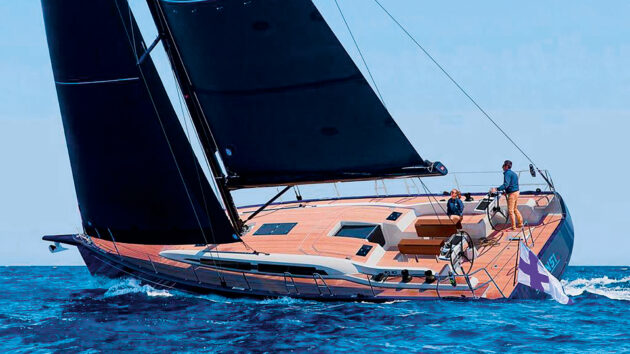
Fifty-one is a magic number for Swan, a model and marque steeped in tradition. The original Swan 51 was also the first designed by German Frers in 1981. This pairing of naval architect and prestige brand has continued to this day in one of the most successful relationships in sailing, with over 700 Frers Swans launched.

With the resurrection of the Admiral’s Cup this summer, it’s also topical to note that that first example was based on the 51ft Admiral’s Cup yacht Blizzard, while a Swan 51 was also the first yacht owned by chairman Leonardo Ferragamo.
Over the decades, the 50-footer has remained an ideal size for most types of coastal and offshore sailing.

This latest 51, which launched in July, is very much a modern luxury fast cruiser, albeit with the elegance to give it Swan’s evergreen appeal. Once again a Frers design which promotes easy and comfortable fast sailing, it has attractive, long, low lines, while today’s trend to carry full beam right aft helps add plenty of volume.

Frers has set the mast further aft too for optimum balance, while twin rudders should offer full control at an optimum performance heel angle of 20°. Three keel draughts are offered, as is a sportier setup, featuring a larger carbon mast, square-top main and runners. Things have changed on deck as well, and while this may look very go-faster sleek, it boasts a generous cockpit, a practical sail locker and Swan’s huge double-hinged swim platform to extend deck space further.

Wide coamings help swell that cockpit size, allowing for twin tables to seat up to 10 or be lowered into sunbathing beds. The three-cabin layout sees an owner’s cabin forward in which most people would be more than happy spending long periods. Different configurations can be chosen for the saloon and chart table and Swan offers a choice of four distinctive ‘atmospheres’ for the trim and upholstery.
Oh, the Bordeaux 60! I remember well poring over the first images in 2008 in the office, my colleagues then turning green with envy when I had the chance to do a three-day sea trial. Now meet the 2025 version.

Things have changed with CNB in that time. Back then, it was under the Beneteau Group’s tenureship, yet for the last four years, it’s moved to Italy and Solaris Yachts. This brought a renewed focus on CNB, the 78 an excellent representative and replacement for the older 76. Now comes the ‘baby’.

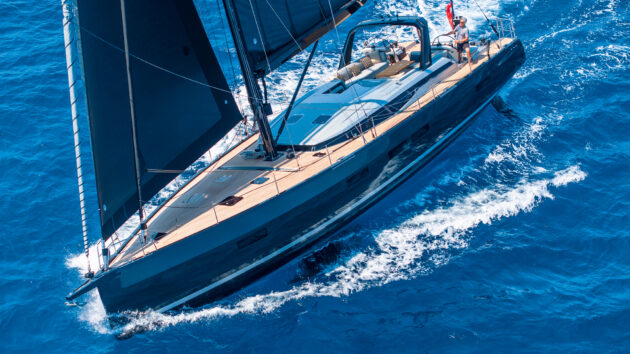
This 62 seems to take the DNA of the Bordeaux 60 – of which 46 were built – and uses the same designers to give it a more contemporary tilt. The lines are once again from the hand of Philippe Briand with a bright interior by Jean-Marc Piaton.

The goal is to offer easy short-handed cruising at speed, in elegance, and with space for plenty to join. Briand says she is powerfully rigged but will suit ocean sailing. Importantly, it is designed for a couple to operate, thanks to twin headsails and in-boom furling; in particular, the mainsail is taken to the carbon arch above the cockpit, keeping it clear of crew members. A fixed bimini can be chosen to protect the cockpit. Helm stations are further forward than past models, so benefit from this cover, with winches close behind them. This also leaves space for plenty of sunpad area above the 3m dinghy garage.

Below decks, the owner’s cabin utilises the entire section forward of the mast to create a proper home-from-home suite, with an optional office attached, while the open galley midships connects to the raised saloon.

First reports from sail trials have been very positive, which comes as no surprise given our high impressions of the larger 78.
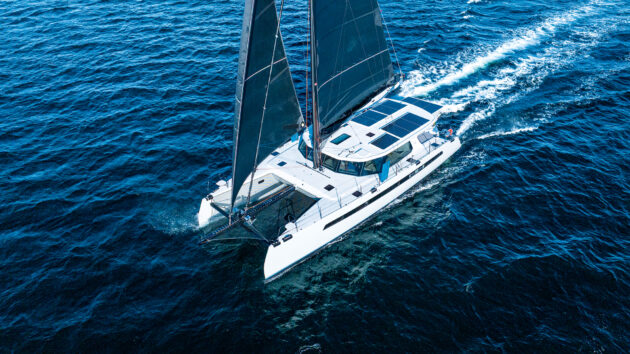
South African designer Anton du Toit has got the lines of Balance’s new 580 spot on to my eyes – low and lean – and with nine already ordered, I’m not alone in my admiration. Two launched this spring, with the first headed for the Annapolis show in October (Windigo pictured) while the second, Swann, has already completed her shakedown passage from Cape Town to the Med to be exhibited at Cannes.

I was going to describe it as the flagship, but that title only stood for a few months as the 750 has now just splashed, in what are clearly busy times for Balance!

A “high performance luxury voyager,” is how founder Phil Bermann labels the 580. It uses a carbon-reinforced, foam-cored, full epoxy build, which results in a standard displacement under 17 tonnes, or “the lightest catamaran in her class with the highest level of interior volume and storage capacity,” he states.

High bridgedeck clearance and deep daggerboards combine with the length and light displacement to promise high average passage speeds. In flat water reaching conditions, the 580 should match or exceed 8-16 knot true windspeeds, and hit the latest teens in 20 knots. It can also be chosen with additional carbon in the coachroof, bulkheads, soles and appendages for extra weight savings and stiffness.

One of the most impressive features for fast cruising seems to be the ease with which it can be handled, thanks to Balance’s VersaHelm wheel, which cants inboard to steer from a protected position, and, in particular, the cutter rig with all three headsails on electric furlers controlled from the helm.

Previous Balance models have been bright and refreshing inside, and the 580 promises more of this with its extra-large side windows and skylights in the coachroof.
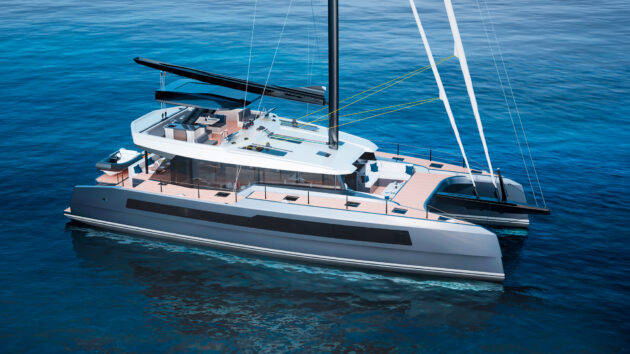
McConaghy MC68

What a sight this big cat will make. A ‘pocket superyacht’ design from Jason Ker, it builds on the footprint of the 62, but with a crew cabin, extended aft deck and flybridge options.

Hydraulic centreboards are once again neatly integrated into the hulls without swallowing much accommodation space or penetrating the decks. Together with the yacht’s E-glass, carbon composite and Corecell foam construction controlling the weight, and the fine bows and performance hulls, these boards will help with pointing and performance. The predictions of 20+ knot speeds look very attainable.

McConaghy’s preference for dual wheels set on each flank of the flybridge helps promote unobstructed views from the helms. Another benefit here is that, with no internal or bulkhead helms, the main deck’s saloon and aft cockpit feel extra sumptuous.

M2atelier has gone for an architectural and apartment style feel, but it’s very much a customisable interior. Colours, finishes and even layout can be tailored to suit.

In terms of accommodation in the hulls, three to five cabins, plus crew cabin, are offered.
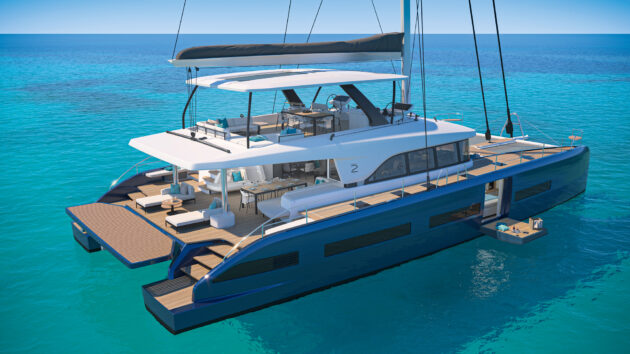
Lagoon’s Eighty 2 & 38

Born out of the Bordeaux yard’s unrivalled experience, especially the success of its (already vast) Seventy 7 and combined with the design powerhouse of VPLP, Patrick le Quement and Nauta, means you can expect seriously big things out of this new super cat.

Eight can relax in the secluded forward cockpit alone. The aft swim platform can extend cockpit space by 22m2, or be used to launch a dinghy, jet-ski, or a few family members into the sea at the push of a button. The 50m2 flybridge towers above like a terrace in the skies, with twin helms and a solar-covered bimini. And then there’s the multitude of cabins, which include’s the owner’s hull door private terrace – a trump card of the 2017-built Seventy 7 worth repeating.

Talking ‘sustainability’ may seem incongruous on such a craft, but we think it worth highlighting the Beneteau Group’s continued major advances in materials and the results with resin here.

For years Lagoon has been using hemp fibre and bio resin in non-structural parts. Passing the required quality tests has allowed it to employ 100% bio-sourced resin for the entire hulls of this Eighty 2, and therefore halving the carbon footprint of the resin.

More on this in our big cat special next month.

At a more tangible level to most sailors, Lagoon will also be exhibiting its smallest new model, the Lagoon 38 which launched at the International Multihull Show earlier this year.
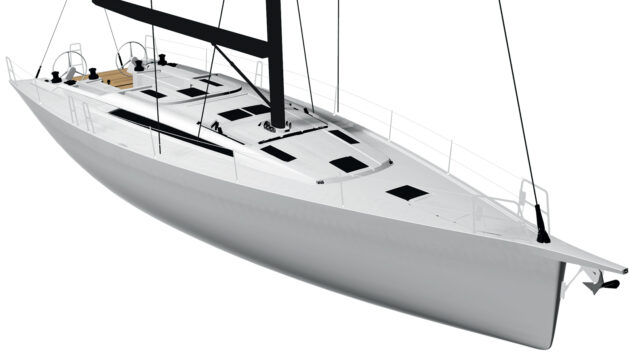
Italia Yachts 16.98

Performance cruising and style specialists Italia Yachts is due to launch its new flagship this autumn, but only in time for the Genoa show from 18 September.

In comparison to the Molfetta yard’s previous models, the 16.98 is designed more for cruising, and offshore/long-term cruising at that. It represents a large step up from the yard’s previous 15.98, including a lighter weight build, which features a higher percentage of composite material, a full carbon grid and carbon structures. The result is that displacement is kept to 17.5 tonnes despite a full itinerary of cruising equipment such as aircon, lithium batteries and safety systems.

The shape also differs from its siblings, with a vertical transom to include a dinghy garage, while the deck plan is simplified to encourage short-handed operation. The first hull will cruise the Mediterranean before taking part in the 2026 ARC en route to Boston.
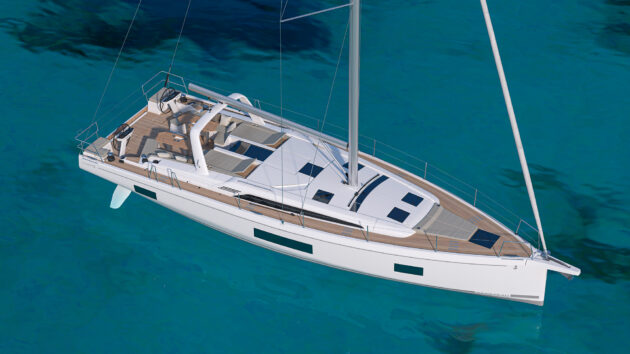
Beneteau Oceanis 47 & 52

Beneteau launches the eighth generation of its Oceanis range, one of the world’s most popular cruising yachts, with the unveiling of a new 47 and 52 this autumn. Granted, they share close resemblances to the previous 46.1 and 51.1, but remember those were very successful models – particularly the 46.1, which was a clear European Yacht of the Year winner in 2019.

That Finot Conq hull shape on the 46.1, with its full-length chine that helped create a balance of space and speed, has been tweaked rather than redrawn by the looks of the renders. The L-shaped cockpit has increased in size and is offered in open or closed formats.

Multiple layout options are available – from three cabins and two heads, to five cabins and three heads – and in three different trims.

The larger sister 52, meanwhile, sports a new hull and deck, with the extra beamy aft profile the signature of America’s Cup designer Roberto Biscontini. By carrying this generous beam right to the stern, it helps create 30% more cockpit space over its predecessor. This also uses twin C-shaped cockpit benches to create a new diamond shape, promoting unhindered passage through the centre and around to the side decks.

Nauta has clearly influenced the styling on deck and below, where warm wood, quality upholstery, and Corian worktops show elegance. The forward owner’s suite looks grand. Both models are also offered as First Line versions with taller masts and increased sail areas.
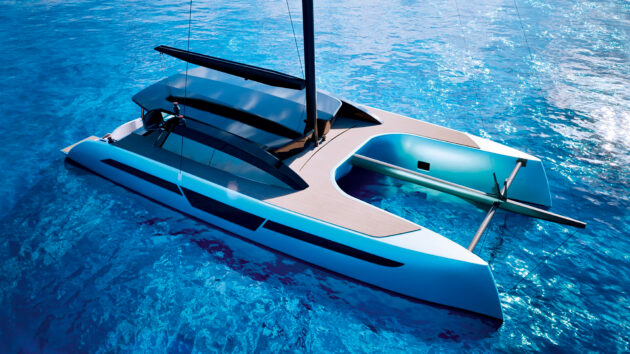
Comar C-Cat 65

For sailors looking for rewarding cruising multihulls that can replicate the feel of a performance monohull, the C-Cat 48 is one of the most responsive examples I’ve sailed in recent years. And when you visit this 50-year-old family-run yard near Rome you understand why. Performance sailing is Comar’s DNA and so much of what they produce is crafted in-house.

Press information about the launch of their flagship new catamaran, a formidable 65ft of fast cruising luxury, is telling. In contrast to most yards, which tend to highlight the finishes and options available, the accommodation spaces and glitzy bits, Comar is all about the stiff and light construction.

Designed by Enrico Contreas as a high-performance sports cat, the 65 merits 40,000 construction hours, with every piece of furniture hand-made in the yard. Carbon is the predominant material choice, used with glassfibre for the hull, pre-preg preferred for the in-house-built mast, together with carbon daggerboards, crossbeams, bulkheads and bowsprit. For optimum stiffness-to-weight, Comar uses a double-cut Corecell sandwich with vacuum-infused epoxy resin.

The result on the water weighs only 18.5 tonnes, and promises uncompromised, exciting sailing in pretty much any wind. For those still interested in what’s inside, there’s plenty of space in three or four guest cabins plus one crew, with an aft owner’s suite, but that’s about all I can tell you so far! This is one we’re looking forward to seeing and sailing.
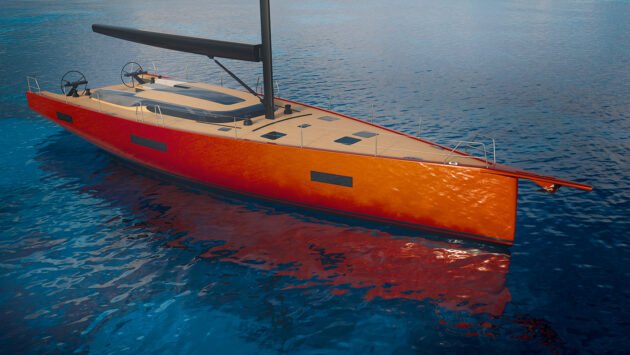
Ice 64 Explorer/66 Sport/70RS

Ice is very much an archetypal Med fast cruising brand, which helps make this new 64 Explorer all the more distinctive, with its blend of go-fast meets purposeful styling. The Felci design offers something really different for the Milan yard, a performance yacht designed for ocean cruising, with energy and operational independence.

A carbon T-top and bimini encloses an otherwise sleek cockpit. This structure is multi-functional, providing crew protection, and housing the mainsheet traveller, solar panels, and rainwater collection drains. The arch also serves as a crane to lift the dinghy onto the wide sugarscoop-style transom.

Inside is a three-cabin layout and a dinette opposite the midships galley, which can transform to a berth. The crew cabin has access to the engine room, and there’s a multifunctional area which includes a large workbench, laundry and heads to suit extended periods of living aboard.

The first of two 64 Explorers in build will be on display at Cannes alongside the latest versions of the Farr-designed Ice 66 Sport and the Felci Ice 70RS, both of which we have reviewed and shot on video in recent years. The 66 marries powerful Farr lines with chic Italian styling by Micheletti & Partners, while this RS version of the Ice 70 is a sub 30-tonne Felci design with a Cariboni lift keel, and is created to compete at international regattas without compromise on comfort.
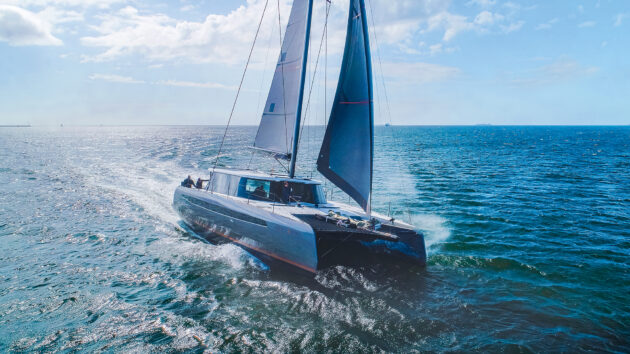
Kinetic KC54

Having shown and written about this Kinetic catamaran and its KC62 larger sister over the years, from when the brand was in concept stage, but still never having had the chance to board one, we are particularly excited about the prospect of doing so now, with Kinetic making its European debut at Cannes. It will have a KC54 at the show and potentially one anchored in the bay for sea trials.

Kinetic really hits the niche of luxury crossed with high performance. Built in Kynsna, South Africa, its catamarans offer fast cruising quality, and use equipment from top suppliers.

The KC54 is offered with Performance or Turbo packages and owners can choose slab-reefing on V-booms or electric in-boom furling.
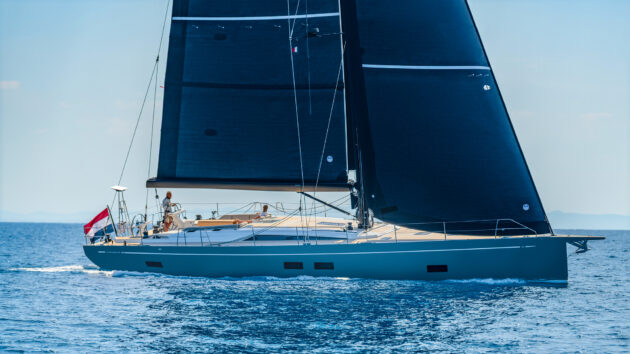
Grand Soleil 65 Performance

Following in the footsteps of Grand Soleil’s recent large and exceedingly cool models, the 72 and the 65LC (featured at length last August), comes this Performance version of its 65. It forms part of the brand’s semi-custom Plus line of models over 60ft and made its debut in May.

The Matteo Polli and Nauta design is naturally similar to the LC, albeit with a different deck line and alternative interior layout. Gone are the panoramic windows and raised saloon in favour of a sleeker look and saloon at the same level as the forward accommodation.
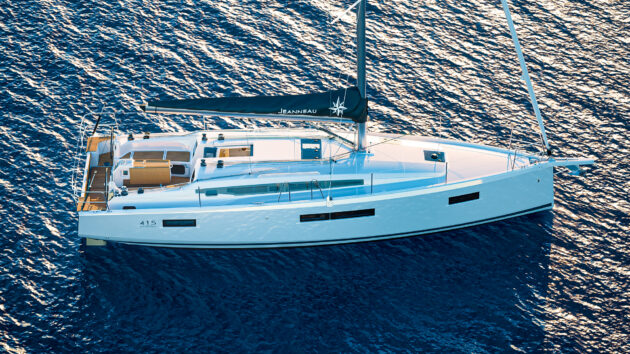
Jeanneau Sun Odyssey 415

This first model of the 9th generation of Sun Odyssey has a tough task in replacing the highly popular Sun Odyssey 410, but trusting that to the proven design house duo of Marc Lombard and Jean-Marc Piaton gives Jeanneau an optimum chance of success.

Many of the features which worked and we saw before are repeated in a similar style yacht, including the reverse stem and walkaround side decks. The 415 is offered with four sailplans and three keel options. Its interior looks light and spacious in the saloon, there’s an L-shaped galley, and it’s offered with two or three cabins and one or two heads.
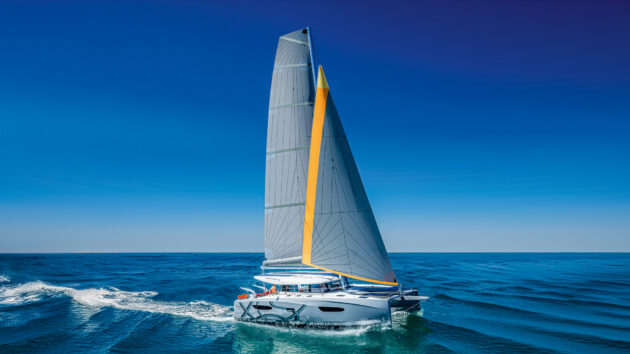
In a triple showing for Excess, the Beneteau Group brand will display its latest Excess 13, which we have shown a couple of times in these pages, alongside its smallest and largest models, the Excess 11 and 14. We toured the 13 at the International Multihull Show and it offers an exciting blend of space and performance with plenty of bright accommodation for fast cruising.
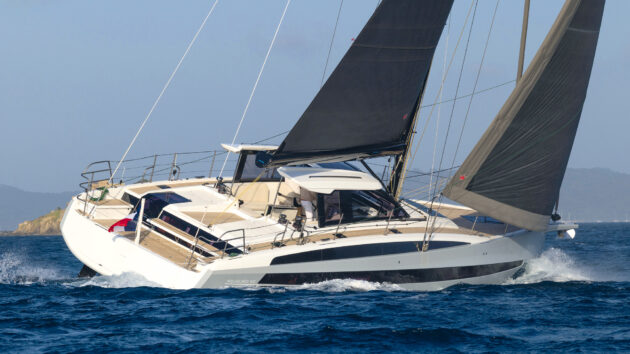
This proved a showstopper at its debut in Düsseldorf in January, and our subsequent video tours have been very popular. The novel Lombard-designed hull features distinctive reverse sheer and chines combined with a protected and covered central cockpit. If the raised saloon looks inviting, wait until you see the class-leading space in the aft owner’s suite, complete with its own companionway access onto the aft deck.


If you enjoyed this….

Yachting World is the world’s leading magazine for bluewater cruisers and offshore sailors. Every month we have inspirational adventures and practical features to help you realise your sailing dreams.

Build your knowledge with a subscription delivered to your door. See our latest offers and save at least 30% off the cover price.
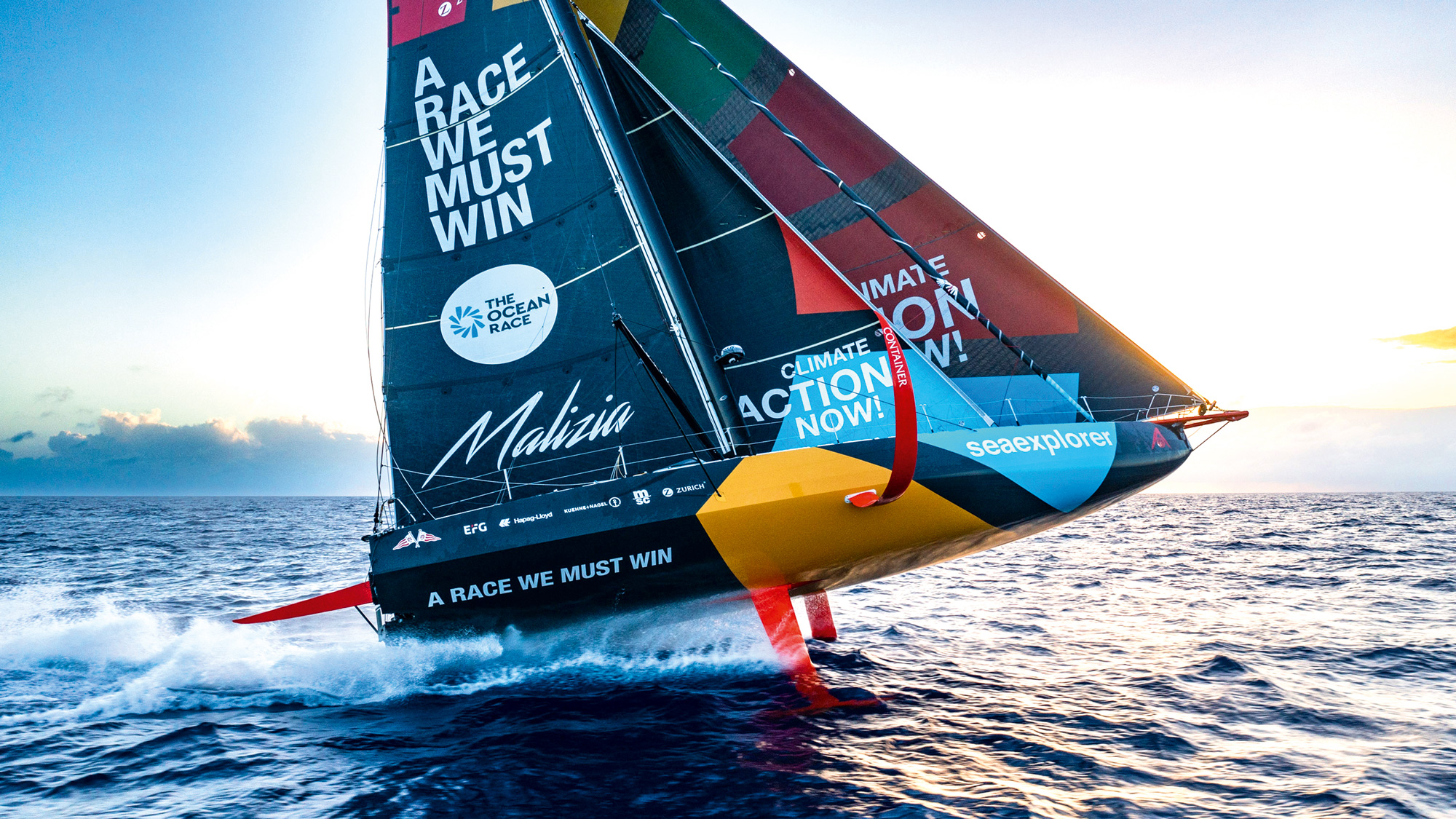
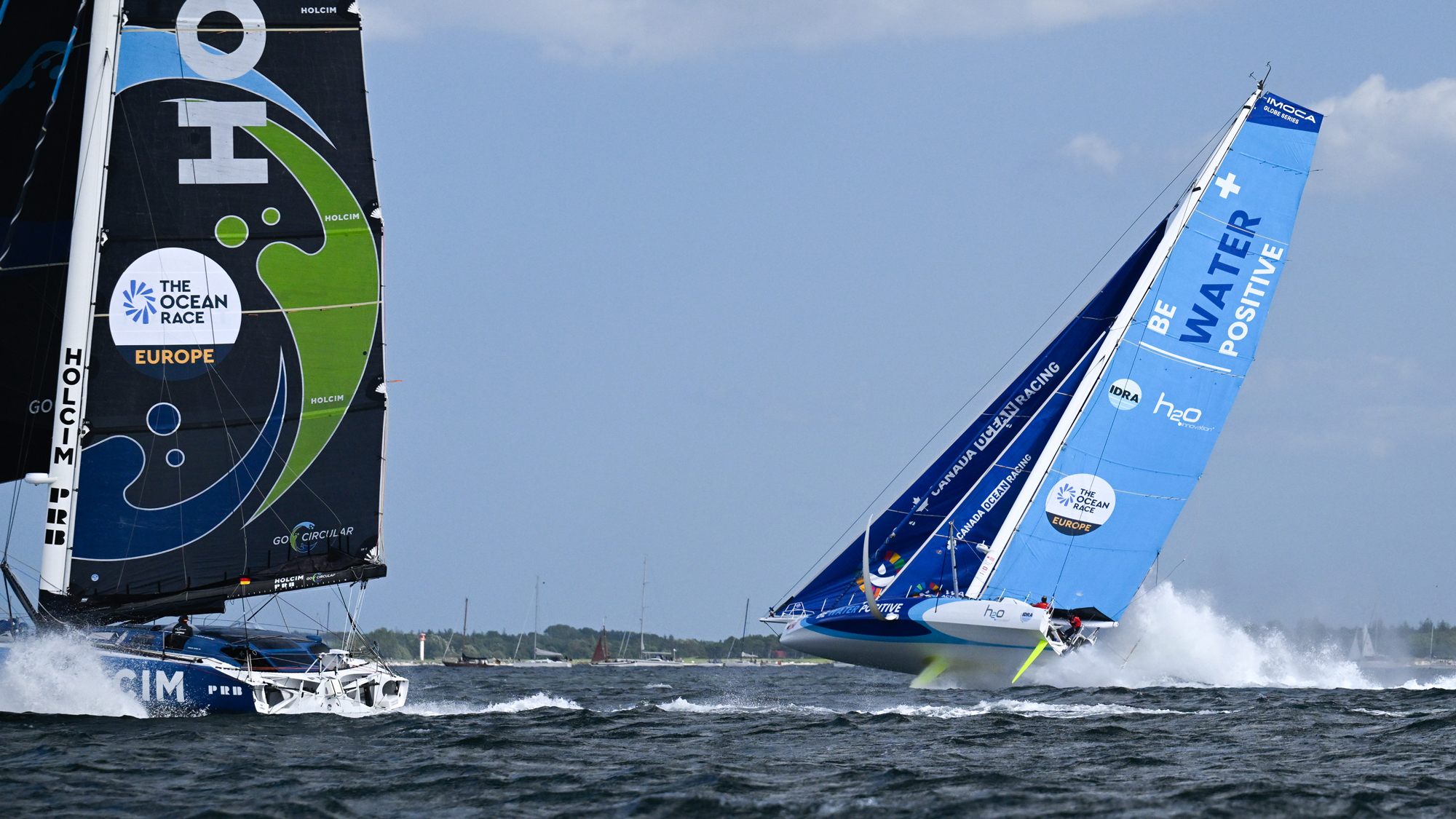
‘This one was special’ – Homecoming victory for Beccaria in The Ocean Race Europe Leg 4

Italian sailor Ambrogio Beccaria and his team Allagrande Mapei took first place in the Ocean Race Europe Leg 4, breaking Biotherm’s so-far perfect score. Leg 4 saw the fleet facing electrical failures, unstable Mediterranean conditions, and the infamous Bouches de Bonifacio.

Ambrogio Beccaria’s team Allagrande Mapei Racing made a triumphant finish to The Ocean Race Europe Leg 4 as they arrived in Genoa, Italy early Wednesday morning.

Beccaria, who built and launched his Class 40 yacht in Genoa in 2022, said he considers the city his second home, and was overjoyed to have gone from missing Leg 1 completely due to a dramatic collision with Holcim-PRB to winning this stretch.

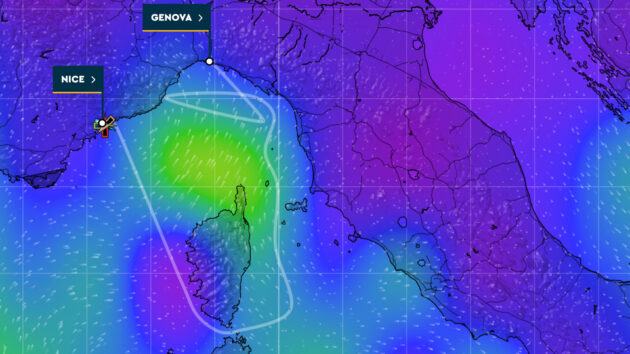
The Ocean Race Europe Leg 4 saw the fleet of IMOCA 60s on a 600 nautical mile leg that started in Nice before snaking around Corsica, through the famed Bouches de Bonifacio, and into Genoa, which hosted the Grand Finale of inaugural edition of The Ocean Race Europe in 2021.

Already at the start of the Ocean Race Europe Leg 4, Beccaria had said he had only one goal– to be first across the finish line in Genoa.

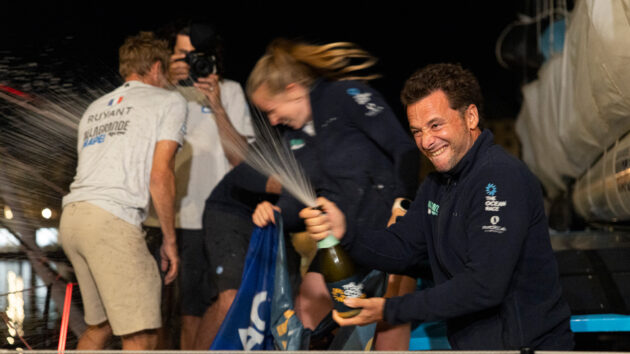
After coming ashore in the night, having finished the leg at 01:42:14 local time on Wednesday 3 September, he confirmed, “I always want to win every leg. But this one was special because the finish was in Italy.”

Beccaria wasn’t the only Italian sailor looking forward to a homecoming.

Francesca Clapcich of Team Malizia said, “I’m really looking forward to having a lot of Italian people coming down in Porto Antico in the middle of the city. We have an Italian boat also in this race with Ambrogio. Hopefully people will be really excited to come down, check it out, and spend time together.”

Second at the end of the Ocean Race Europe Leg 4 was Yoan Richomme’s Paprec Arkéa, followed by overall race leader Biotherm in third.

Ocean Race Europe Leg 4 at a glance

  • The fleet leaves Nice sailing upwind
  • Biotherm first through the scoring gate off Monaco
  • Light winds off the Western side of Corsica
  • The pace picks up as the fleet races through the Strait of Bonifacio
  • Power outage onboard Allagrande Mapei as they pass the Island of Elba
  • Homecoming victory for Ambrogio Beccaria and team Allagrande Mapei

Seven teams, six weeks, five legs, one unforgettable race. For its 2025 edition, the Ocean Race Europe will bring together…

The opening leg of The Ocean Race Europe was rocked by drama within moments of the starting gun as two…

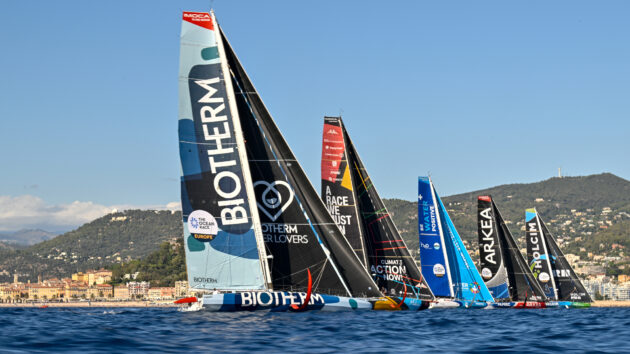
Ocean Race Europle Leg 4 starts in Nice

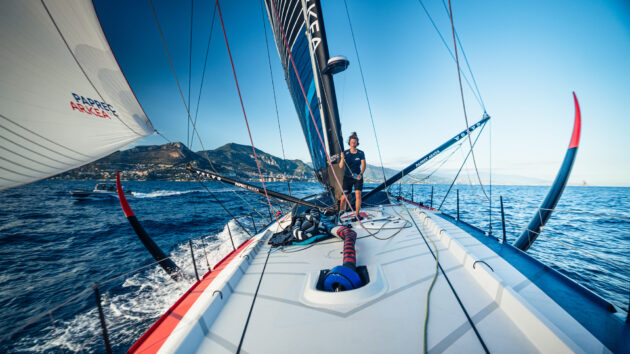
The fleet, Code Zero headsails high, headed upwind in 8 knots of wind. Photo: Jean-Lous Carli / The Ocean Race Europe 2025.

Holcim-PRB, with Nico Lunven replacing skipper Rosalin Kuiper for Leg 4, and Paul Meilhat’s Biotherm made the cleanest start, slipping away from the pack within the first minutes of the race.

Team Amaala opted for a port start, heading offshore hoping for stronger winds and hoping to reap the benefits of a radically different tactic.

Paul Meilhat of Biotherm, the race’s clear overall leader, had commented, ‘It’s better to be the hunted than the hunter, that’s for sure. I don’t really care about the pressure. It’s not that I like it, but it doesn’t affect me a lot. When you’re chasing the others, it’s more pressure. You have a problem to fix, you’re not really confident.”

True to his word, Biotherm was once again first through the scoring gate at Monaco, snatching the lead from Paprec Arkéa at the last second.

Photo: Gauthier Lebec / the Ocean Race Europe 2025.

The winds died away overnight, taking the fleet through patches of calm. Paprec Arkéa held speed more consistently than the fleet, managing to gain a one mile lead.

A breath of air around 2am separated leaders Holcim, Paprec, and Biotherm from the rest of the group.

“Our first night at sea didn’t really go according to plan,” said Team Malizia’s Cole Brauer of falling behind, which she called “disappointing.” “They were blasting away while we were just sitting ducks.”

Uncertainty in the Mediterranean

In the Mediterranean, “Nobody knows what’s going to happen,” said Biotherm’s Benjamin Ferré. “We study the Meteo and try to understand what will happen, but in the end it is totally different. So we just have to adapt, keep moving, keep focused, and try to go as fast as possible in the right direction.”

Pip Hare, who sailed the last leg of The Ocean Race Europe 2021, said, “My experience is there is not a lot of wind, with waterspouts and thunderstorms – it throws it all at you.”

Photo: The Ocean Race Europe, Powered by PredictWind.

As in Leg 3, Italian sailor Ambrogio Beccaria of Allagrande Mapei remained unfazed by the unpredictable conditions in his home waters.

“I love Mediterranean sailing,” he commented. “I was born here and it is what made me love the sea. I hope she loves me too, but sometimes it is a difficult relationship and it is hard to understand what she wants.”

Sprint through the Bouches of Bonifacio

Team Hoclim-PRB pulled ahead as the fleet approached Bonifacio, with Biotherm and Paprec Arkéa close behind. They were fresh off a long night of light air sailing, during which the fleet stayed compact.

“There’s going to be lots of manoeuvres now, lots of tacking, a transition. We will probably go into the strait upwind and come out of it downwind. It’s going to be a busy few hours,” said Alan Roberts aboard Team Holcim-PRB.

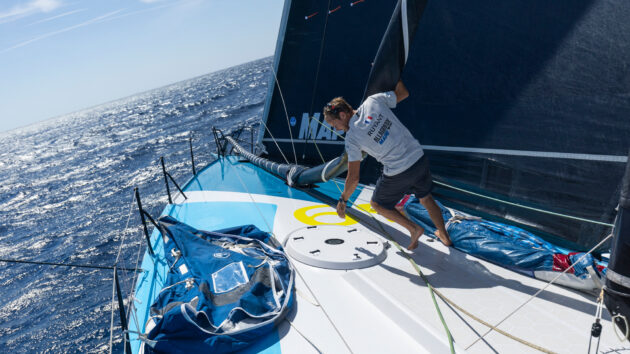
As the fleet came into the Strait of Bonifacio and the wind increased from five knots to nearly thirty, the sailors had to exchange their enormous Code Zero headsails for smaller J3s.

Photo: Julie Champolion / The Ocean Race Europe 2025.

“Racing around Corsica is always very tricky because the mountains on the island are big and their wind shadows are huge,” says Paprec Arkéa’s Yoann Richomme.

Holcim – PRB skipper Lunven explained how the Venturi effect impacted conditions, “In the Bonifacio Strait the wind increased because of the funnelling effect between Corsica on our port side and Sardinia on our starboard side. These islands are very high – especially Corsica – between 2,000 and 2,500 metres. It is a narrow passage between the two, so the wind accelerates a lot.’

Still, he commented, ‘30 knots for Bonifacio is an easy day – it could have been way worse!”

Allagrande pulls ahead off the Island of Elba

Photo: Pierre Bouras / The Ocean Race Europe 2025.

Even as they dealt with an onboard power issue that left them without sailing instruments for an hour, Ambrogio Beccaria’s team Allagrande Mapei managed to pull ahead of the fleet while passing the island of Elba.

“At one point we tried to charge our battery and the engine didn’t start. So we had to shut down the whole boat, steer the boat with nothing – at night. Morgan succeeded in repairing the alternator and we were able to go on with the race. But that moment could have been the end for us,” said Beccaria.

Allagrande’s triumphant arrival in Genoa

Photo: Lloyd Images / The Ocean Race 2025.

Beccaria’s Allagrande Mapei held on to their lead and made the most of an incoming breeze from a Mediterranean low pressure system. They sprinted towards Genoa, hitting 25 knots of downwind foiling speed and increasing their advantage to 20 nautical miles over chasers Paprec Arkéa.

Undaunted, Paprec Arkéa managed to shrink the gap to just eight miles, but it ultimately wasn’t enough to overtake Beccaria’s homecoming team, which pulled away again thanks to an offshore drainage breeze.

When is the Ocean Race Europe Leg 5?

After enjoying celebrations and some much-needed rest in Genoa, the fleet will set off for Ocean Race Europe Leg 5, the race’s last, on 7 August. The 1,000 nautical mile dash to Montenegro will take them through a scoring gate at Santo Stefano, in the Arcipelago della Maddalena, before the race’s grand finale in Boka Bay.


If you enjoyed this recap of the Ocean Race Europe Leg 4….

Yachting World is the world’s leading magazine for bluewater cruisers and offshore sailors. Every month we have inspirational adventures and practical features to help you realise your sailing dreams.

Build your knowledge with a subscription delivered to your door. See our latest offers and save at least 30% off the cover price.
Note: We may earn a commission when you buy through links on our site, at no extra cost to you. This doesn’t affect our editorial independence.

Buying a yacht for £100,000-£250,000: Tips and tricks

When buying a yacht for £100,000 to £250,000 you might not buy you a large boat new, but you can make your money go a long way with the same amount on the used yacht market

Visit any of the major boat shows with a view to placing an order and a budget of around £100,000 to £250,000 will put you in the production-built yacht market, perhaps up to around 40ft at a stretch. It won’t buy you even the smallest Hallberg-Rassy new. But take the same amount into the used market and a lot of options open up if you’re prepared to buy an older yacht.

Buying a yacht for £100,000-£250,000: A tricky price point?

Buying a yacht is not without complications. It can be hard to predict what will need to be spent, even after having a survey done. Balancing purchase budget and a fund for works that are needed is very important.

“The big advantage of buying an older yacht is that you are trading depreciation, which is an upfront cost, for the cost of refit/upgrade, which is a cost that you can manage and decide when and how to spend,” explains broker Alex Grabau.

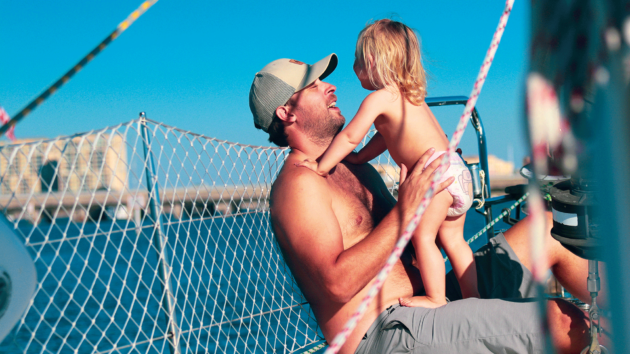
A man holding a baby on a yacht

Adapting a pre-loved boat for family cruising can get you more for your money. Photo: Monday Never

“As depreciation is often no longer a notable factor with older boats, an owner must also then understand and accept that such costs of refit/upgrade may then become their ‘cost of ownership’ – with not all of it recoverable upon subsequent resale.”

When it comes to saving money, Grabau says it’s clear what almost everyone looks for first.

“The one everyone wants to buy will be the older boat (so little or no depreciation) where an owner has just refitted or upgraded her for a planned adventure which has either been completed quickly (with little wear or degradation to the equipment), or where the plans have been cancelled.

“The owner will almost certainly see a percentage of their refit investment written off, making the boat a fantastic opportunity for a buyer looking to save some money and, perhaps most importantly, time,” he adds.

Get covered

Once purchased, next steps are likely to mean rectifying any serious faults or problems highlighted by the survey. “The only aspects which are going to stop you heading off immediately relate to safety, reliability and, linked to that, the stipulations of your insurer,” adds Grabau.

“This will usually mean inspection – or in some cases replacement – of standing rigging if older than 10 years, replacement of saildrive diaphragms (if fitted) if over seven years old, thorough servicing of mechanical systems, and either servicing, replacement or upgrade of safety equipment.

View from the deck of a yacht

The first post-refit cruise will always be special. Photo: Living With The Tide

“Most other refit items can be attended to immediately, or pushed further down the road if budgets don’t immediately allow.”

Marine insurance companies regularly deal with customers about to buy a yacht that they have plans to improve. Understanding whether the yacht is fundamentally safe is the primary concern of an insurance broker, explains Andy Crick, a director at Pantaenius UK.

“When a customer gets in touch about a yacht they want to insure we take a holistic approach; every yacht really is different. As a broker it is important to consider the fundamentals. Is it likely to catch fire? Is it likely to sink? Is the rig likely to come down?

Rescuing another family mid-Atlantic made safety a priority for Will and Cat when seeking their next yacht

Rescuing another family mid-Atlantic made safety a priority for Will and Cat when seeking their next yacht. Photo: Monday Never

“We regularly insure yachts that have a passage to make to where they are going to have work done, but we need to ensure the yacht is safe for that delivery passage.

“One prospective yacht may need very little work done, having benefitted from a proactive and comprehensive maintenance schedule in prior ownership. Whereas a similar yacht out of the same yard at the time of build may have had a harder life, been cared for less sympathetically over the years and might require extensive work in a number of areas,” says Crick.

What to look for: key considerations by yacht insurance brokers when buying a pre-owned yacht:
■ Type and age of yacht and material of construction
■ Structural integrity of the hull. Has the vessel suffered damage? Have any past repairs been completed properly?
■ Condition of the hull-to-keel joint and age and condition of keel bolts (where relevant)
■ Seacocks and through-hull fittings. What type are they? How old are they? What is their condition? Are all below-the-waterline hoses secure and double clipped?
■ What are the bilge pumping arrangements?
■ Age and condition of stern seals or sail drive seals
■ Rig; type, age, condition, last service, inspection or replacement?
■ Onboard electronics: type and condition of the batteries, condition of the wiring, RCD protection?
■ Onboard gas system (if any), including hoses, pipes, regulator and safe storage of gas bottles. When was the gas system last professionally inspected and serviced?
■ Fire prevention measures and onboard firefighting equipment
■ Condition of the rudder and steering system
■ Main engine and gearbox condition and maintenance
■ Operation of navigation equipment
■ Lifesaving apparatus.

Article continues below…

Wide birds-eye-voew pf a sand bank and turqoise sea.

Buying a yacht abroad is a scenario few cruisers might dare to pursue. Quite apart from the giant leap of…

Over the last three decades there has been a spectacular classic boat revival, resulting in – and further encouraged by…

We did it

Catherine and Will Marks bought their 1995 Contest 46 Paradox. When it came to finding their second yacht, Will and Catherine Marks had experienced enough sailing to shape a list of features that quickly struggled to tally up with their budget.

Having previously owned a production-built boat, they were determined to buy a yacht that was well built and set up for long term cruising. A little more knowledge, however, had given them a long list of criteria.

Generous aft cabin makes the Contest 46 very comfortable for living aboard

Generous aft cabin makes the Contest 46 very comfortable for living aboard. Photo: Monday Never

“We backed ourselves into a corner with the list we’d come up with.”

An incident while crewing on a Discovery 67 crossing the Atlantic had made a deep impression on the couple a few years before. The video they made of it rescuing a family on a yacht that had lost its rudder now has two million views on YouTube (Monday Never).

“It was an experience we reflected on a lot and certainly had a massive influence on our own decisions afterwards,” explains Will. The couple now have a young child of their own and have been afloat as a family for three years.

Paradox proved a great family yacht

Paradox proved a great family yacht. Photo: Monday Never

“We looked at a lot of boats that met, or were very close to meeting, all of our criteria. Passports, Hylas, Kelly Petersons – I think we looked at over 20 yachts. Eventually we found the Contest – not a particularly well-known yacht in the US, but a boat with a pedigree.

“Finding a quality boat in our price range meant we were often in a bracket where the yacht hadn’t been well looked after, we realised that,” explains Will.

“Our surveyor was great, but he gave us over 110 points to attend to. A handful were urgent. When lockdown hit, we went into the deep end working on the boat. It was then that things emerged the survey couldn’t be expected to pick up, like leaks from deck hatches.”

The couple embarked on a program of works to get the boat how they wanted her. “All in all we invested around $100,000, which we knew we wouldn’t get back, but it put the boat in the right place for what we wanted to do.”

When it came to moving back ashore and selling the yacht earlier this month, Will and Catherine found themselves inundated with offers. “Brokers were quite negative when we made initial enquiries about listing, but we had loads of interest straight away.”

Matt Donald and Paige Grogan have a Contest 40S

Matt and Paige first owned a Contest 40, before trying classic yacht ownership, then deciding to come back to GRP. While they looked at other brands, in the end, they came back to one they were familiar with, choosing a slightly different variant of the Contest 40 they’d owned before.

Matt and Paige livea board with their dog Lancer

Matt and Paige livea board with their dog Lancer. Photo: Living With The Tide

“We offered well under the asking price knowing she needed work. We then spent a month and a half in Mayflower Marina, Plymouth, renewing the electrics, heating, refrigeration and rigging. The survey was a good guide to what we really needed to do,” explains Matt.

“This Contest actually has slightly less stowage due to how the water tank is fitted, but we think she has a slightly faster turn of speed. We owned an overland truck for a while as well and had sailed our previous Contest to the Caribbean and back.

“By the time we bought her we’d really figured out what we needed in terms of living comfortably afloat. Paige is a freelance graphic designer, so getting the electrics set up to run laptops all day was important.

“The combination of what she offers in terms of space, being good to sail and her build quality is really what made us buy another Contest,” explains Matt.


If you enjoyed this….

Yachting World is the world’s leading magazine for bluewater cruisers and offshore sailors. Every month we have inspirational adventures and practical features to help you realise your sailing dreams.

Build your knowledge with a subscription delivered to your door. See our latest offers and save at least 30% off the cover price.
Note: We may earn a commission when you buy through links on our site, at no extra cost to you. This doesn’t affect our editorial independence.


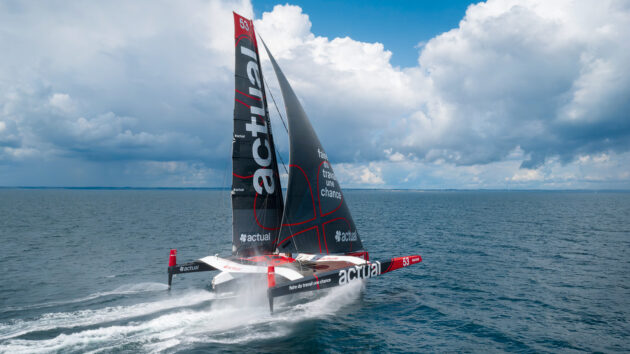
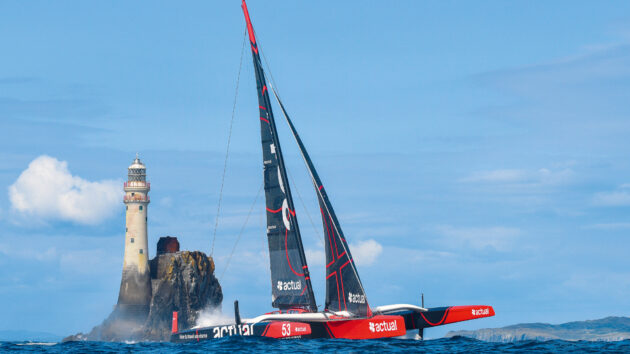
World’s Coolest Yachts: Ultim Actual 4

We ask top sailors and marine industry gurus to choose the coolest yachts of our times. Alan Roberts nominates the Ultim Actual 4

“I’ve been very lucky. I’ve sailed on a lot of really cool boats, modern boats, but also my background’s from dinghy sailing. So up until recently I probably would have said the International 14, which is an absolute classic, or the Merlin Rocket in the UK. But without a doubt, the Ultim is the coolest boat I’ve sailed on.”

Roberts was part of the Actual Ultim 4 crew for the Rolex Fastnet Race. “This was the old Gitana, it’s the new Actual 4. We put the boat in the water a week before the race, and when you buy these boats, you don’t get given all the information – or even all the right parts. So we’ve only scratched the surface of what we can do with this boat.

“It’s just next level. You sail around at 30 knots upwind, 40 knots downwind. The boat’s dead flat, I can make my cup of tea while we’re going 40 knots without even holding the mug! And it’s so reactive. The Ultim is the ultimate sailing machine in the world at the moment.”

Make sure you check out our full list of Coolest Yachts.

Ultim Actual 4 stats rating

Top speed: 51.7 knots
LOA: 32m/100ft
Launched: 2017
Berths: 1-4
Price: €10-15million
Adrenalin factor: 98%

Alan Roberts

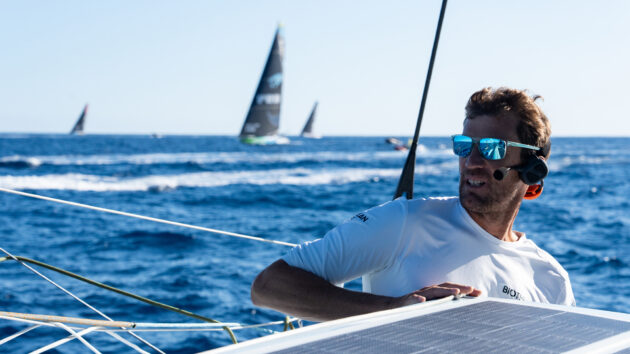
Alan Roberts has won in a huge range of designs, from XOD classic keelboats to International Moths and other performance dinghies. Having raced at the front of the Figaro fleet he is now found on many top ocean race teams, including IMOCAs and Ultims. He will be racing The Ocean Race Europe in the IMOCA Holcim PRB.


If you enjoyed this….

Yachting World is the world’s leading magazine for bluewater cruisers and offshore sailors. Every month we have inspirational adventures and practical features to help you realise your sailing dreams.

Build your knowledge with a subscription delivered to your door. See our latest offers and save at least 30% off the cover price.
Note: We may earn a commission when you buy through links on our site, at no extra cost to you. This doesn’t affect our editorial independence.


Chat/call The AYB Team
error: